
Keynote topics
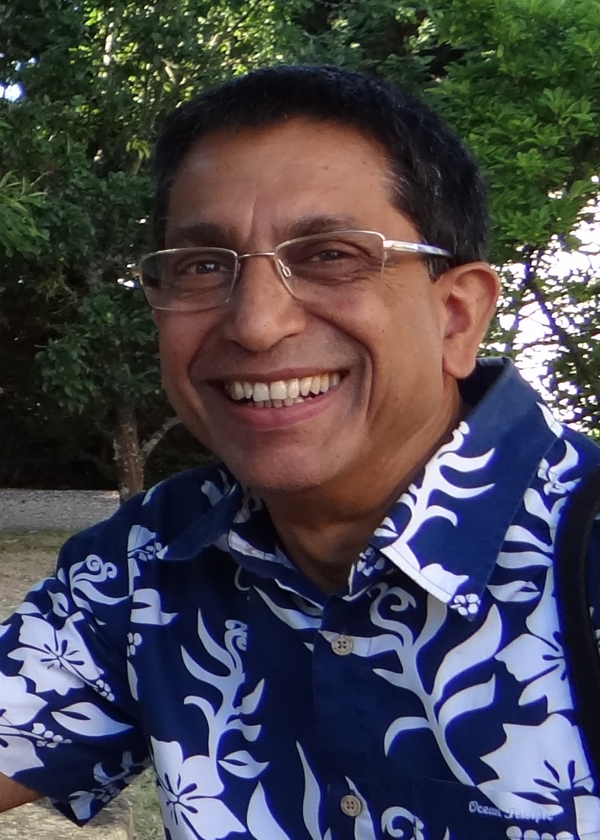
Lightweight Networks for Abdominal Image Segmentation
Asoke K. Nandi
Asoke K. Nandi (Fellow, IEEE) received the Ph.D. degree in Physics from the University of Cambridge (Trinity College), Cambridge, U.K., in 1979. He has held academic positions in several universities, including Oxford University (U.K.), Imperial College London (U.K.), University of Strathclyde (U.K.), and University of Liverpool (U.K.), as well as Finland Distinguished Professorship with Jyvaskyla University (Finland). In 2013, he moved to Brunel University London (U.K.), to become the Chair and Head of Electronic and Computer Engineering. He is a Distinguished Visiting Professor with Xi’an Jiaotong University, Xi’an, China.
In 1983, Professor Nandi co-discovered the three fundamental particles known as W+, W−, and Z0 (by the UA1 team at CERN), providing the evidence for the unification of the electromagnetic and weak forces, for which the Nobel Committee for Physics in 1984 awarded the prize to his two team leaders for their decisive contributions. Also, he has made many fundamental theoretical and algorithmic contributions to many aspects of signal processing and machine learning. He has much expertise in “Big and Heterogeneous Data”, dealing with modelling, classification, estimation, and prediction. He has authored over 600 technical publications, including 280 journal papers as well as six books, entitled “Image Segmentation: Principles, Techniques, and Applications” (Wiley, 2022), “Condition Monitoring with Vibration Signals: Compressive Sampling and Learning Algorithms for Rotating Machines” (Wiley, 2020), “Automatic Modulation Classification: Principles, Algorithms and Applications” (Wiley, 2015), “Integrative Cluster Analysis in Bioinformatics” (Wiley, 2015), “Blind Estimation Using Higher-Order Statistics” (Springer, 1999), and “Automatic Modulation Recognition of Communications Signals” (Springer, 1996). The H-index of his publications is 80 (Google Scholar) and his ERDOS number is 2. His research interests include signal processing and machine learning, with applications to image segmentations, biomedical data, machine health diagnostics, communications, etc.
Professor Nandi is a Fellow of the Royal Academy of Engineering (U.K.) as well as a Fellow of seven other institutions, including the IEEE. He is the recipient of the Institute of Electrical and Electronics Engineers (USA) Heinrich Hertz Award, in 2012, the Glory of Bengal Award for his outstanding achievements in scientific research, in 2010, the Water Arbitration Prize of the Institution of Mechanical Engineers (U.K.), in 1999, and the Mountbatten Premium, Division Award of the Electronics and Communications Division, of the Institution of Electrical Engineers (U.K.), in 1998. He is an IEEE Engineering in Medicine and Biology Society Distinguished Lecturer, from 2018 to 2019.
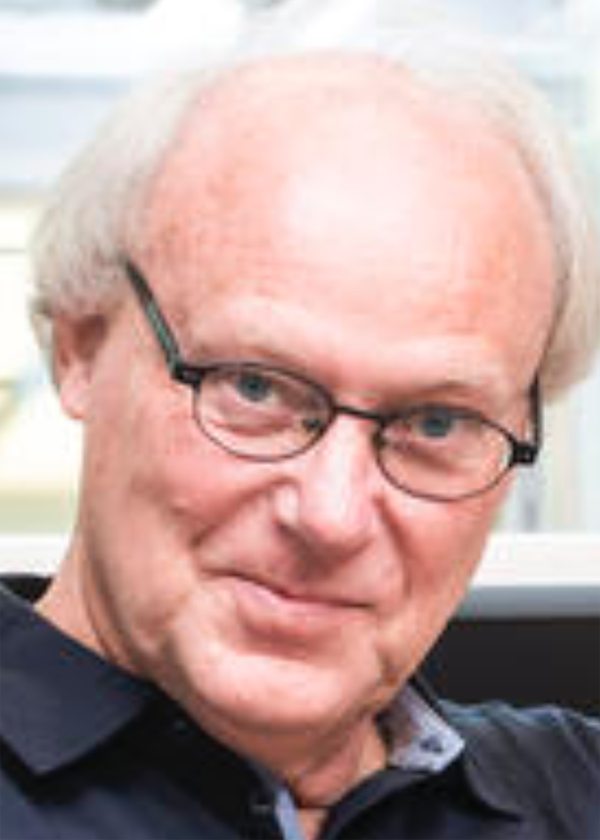
Computational and personalized medicine with a view to network science, machine learning and biophysical modelling
Arvid Lundervold
Arvid Lundervold, BSc, MD, PhD is a professor in medical information technology and physiology at the University of Bergen, Norway. He is also, together with Alexander S. Lundervold, heading the Medical AI group at the Mohn Medical Imaging and Visualization Centre, Haukeland University Hospital (https://mmiv.no). His current research interests are in the fields of medical image processing and machine learning related to multimodal and functional MR imaging (in brain, kidney and in oncology). The research over the years also includes mathematical and statistical modelling in the context of computational medicine. He has been programming in C and later MATLAB, R and Python for more than 35 years and produced >200 publications with a google scholar h-index of 47 and Erdös number 4.
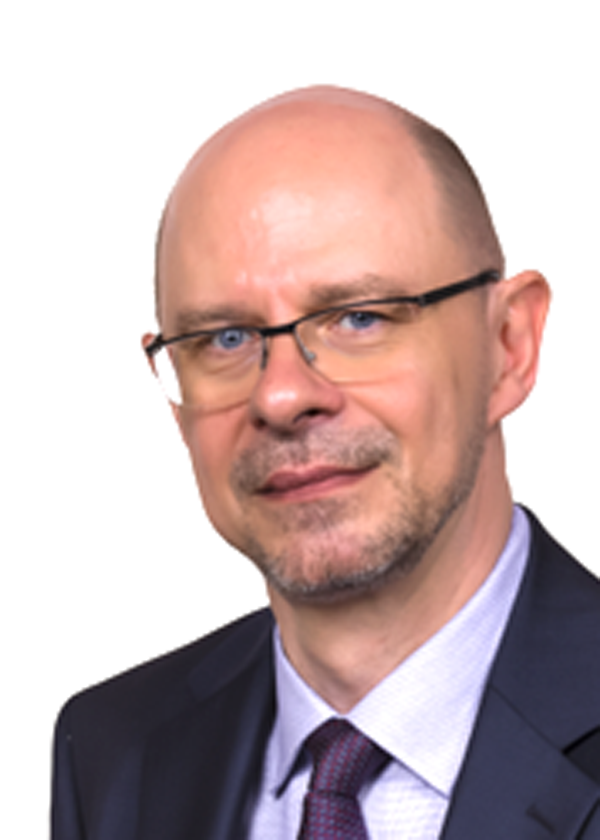
Technical aspects of the impact of radio waves on humans in 5G and 6G cellular systems
Sławomir Hausman
Sławomir Hausman received his M.Sc. degree in electronics in 1982 from Lodz University of Technology (Poland), PhD degree from the University of Strathclyde, Glasgow, the UK in 1990, and DSc degree from Lodz University of Technology in 2009, where he is currently employed as a university professor.
His research focuses on radio propagation modelling, assessment of human exposure to electromagnetic fields, wireless body area networks, radar, optimization of radio communication systems, metamaterials, and digital signal processing.
He is a Chairman of the Polish National Committee of International Union of Radio Science URSI – Commission K (Electromagnetism in Biology and Medicine). He has over 15 years of experience at various academic administrative positions, including nine years as the Dean of the Electrical, Electronic, Computer and Control Engineering Faculty at the Lodz University of Technology. He currently is Head of the Telecommunication Division at the Faculty.
Abstract: Fifth-generation (5G) systems are expected to be a rapidly growing mobile network technology in the coming years. It is inevitable that the network of base stations will become denser to meet expectations in terms of quality of service. Simultaneously, there are public concerns about the new frequency ranges and the total level of electromagnetic field radiation from all sources combined. Also, work is already underway on 6G systems that will differ from current systems in terms of the frequency ranges used (including sub-Terahertz) and the rapidly varying radiation characteristics of mMIMO antennas. The use of sub-terahertz bands and their challenging propagation properties will imply the need for Intelligent Reflecting Surfaces (IRS). This will significantly change propagation scenarios and affect human exposure analysis. I will present some of the technical considerations in 5G and 6G systems that may affect the assessment of exposure to electromagnetic field radiation.
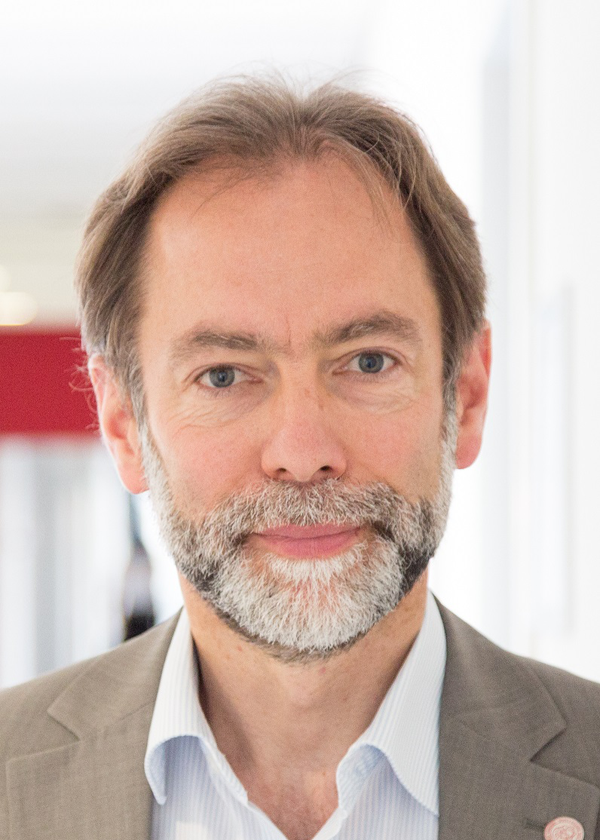
Combining cells and materials for bioprinting of complex tissue models
Michael Gelinsky, FBSE
Michael Gelinsky received his PhD in Chemistry from Freiburg University (Germany). In 1999 he moved to Dresden University of Technology (TU Dresden) and worked for around 10 years at the Department of Materials Science, heading his own group at the newly founded Max Bergmann Center of Biomaterials from 2002. In 2010 he was appointed Full Professor at the Faculty of Medicine and head of the Centre for Translational Bone, Joint and Soft Tissue Research (tu-dresden.de/med/tfo) at TU Dresden. His work is focused on biomaterials and scaffold development, tissue engineering and regenerative therapies, mostly for musculoskeletal tissues.
His group is also very active in the field of additive manufacturing of implants and biofabrication technologies, including bioprinting of non-mammalian cells ("green bioprinting"). He is author/co-author of more than 250 journal publications and 25 book chapters with a current h-index of 61 (Google scholar). At present, Michael Gelinsky is President of the German Society for Biomaterials (DGBM), is a member of the Board of Directors of the International Society for Biofabrication (ISBF) and has been appointed as coordinator of a so-called Topical Team on “3D Bioprinting of living tissue for utilisation in space exploration and extraterrestrial human settlements” by the European Space Agency, ESA. In 2020 he was elected as ‘Fellow Biomaterials Science and Engineering’ (FBSE) by the International Union of Societies for Biomaterials Science and Engineering.
Detailed information about the lab is available at https://tu-dresden.de/med/tfo.
Carbon nanomaterial as a new generation of medicines ?
Ewa Sawosz Chwalibóg
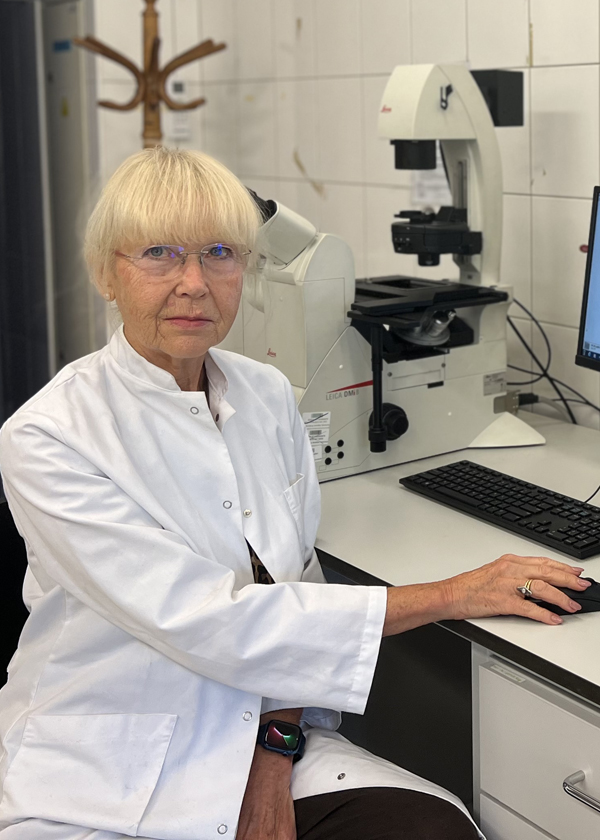
Prof Ewa Sawosz Chwalibóg, DSc, PhD, has been a researcher at the Warsaw University of Life Sciences since 1986. She was the head of the Analytical Center (2001-2003) and then the head of the current Department of Nanobiotechnology (2003-2020).
Research by prof. Sawosz focus on nanobiotechnology, especially on the use of nanostructures as carriers of functional compounds in anticancer therapy. Research carried out by the team of prof. Sawosz concerned of the use of platinum and silver nanoparticles as well as graphene nanoflakes, fullerenes and nano-diamond in the treatment of selected brain and liver cancers. The next area of research was the search for the mimic extracellular matrix - scaffolding, based on GO, stimulating the formation of pseudo-muscle tissue. The next studies included work on the use of the GO-nanoAg complex as an antibacterial and antiviral substance, including against SARS-Cov-2. These studies demonstrated the strong anti-inflammatory properties of GO as a "scavenger" of pro-inflammatory proteins.
Scientific achievements of prof. E. Sawosz has 126 publications, 2600 citations, H-index - 30, (according to Web of Sci. cc). The research allowed to obtain 9 patents and 6 patent applications in the Patent Office of the Republic of Poland, as well as one patent in the EU and USA.